


START HERE: EPISODE 1: The Road Less Traveled.
To be shaken out of the ruts of ordinary perception, to be shown for a few timeless hours the outer and the inner worlds—not as they appear to an animal obsessed with survival or to a human being obsessed with words and notions, but as they are apprehended, directly and unconditionally—this is an experience of inestimable value to everyone. Aldous Huxley, The Doors of Perception.
In college I intellectualized my search for happiness. Doing philosophy left me mentally refreshed and taught me new ways of thinking and our teachers told endless tales of philosophy’s great eccentrics—but I never hear of an enlightened philosopher. They were just as confined to the thinking mind as was I, but they enjoyed it.
Aleister Crowley in Sydney
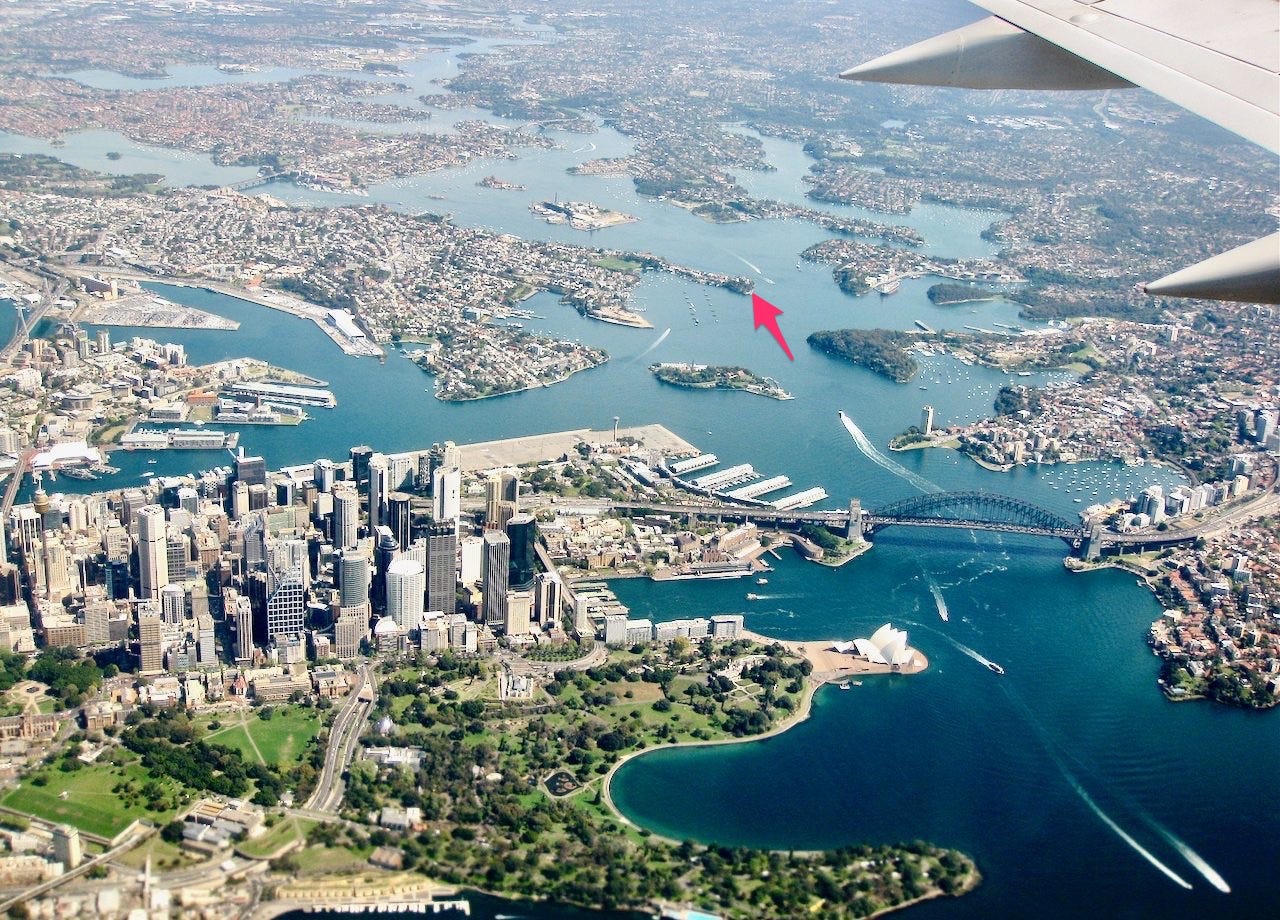
I needed to broaden my search so we moved to the nearest big city, Sydney. My bride and I took an apartment on Long Nose Point, literally in the middle of Sydney Harbor, above where our landlord gave me a book by Aleister Crowley, the notorious Briton whose motto, ‘do what thou wilt,’ advocated both self-overcoming and transgression. My relatively disciplined life was not liberating. I was living in the global capital of self-indulgence, Sydney, and I had time and money. If self-indulgence was liberating, now was the time to find out: could sex, drugs and rock-and-roll do the trick? Long story short: no.
Acid by the harbor
Local hipsters soon introduced me to drugs, then limited to illegal hashish and legal LSD. The choice made itself and my first trip was just like Aldous Huxley’s.
As an animal seriously obsessed with survival I, too, was shaken out of my rut of unhappiness and, for hours, saw the outer and the inner worlds directly and unconditionally as an endless, effortless flow of transformations of my apparently solid surroundings. Regardless of its ultimate value, merely learning first-hand that another world is possible was liberating in itself.
My next trip seemed more profound. I lost all sense of myself as a separate consciousness: warm, clear, breathable white light that seemed to come from (or be associated with my heart region subsumed my body-mind. I was released into lovestruck awe and heart-broken ecstasy—with zero effort on my part.
An anxiety-prone asthmatic child, I was a shallow breather. Now I was breathed. Each cycle of inhalation and exhalation deepened my ecstasy. The more I relaxed into it, the more I became it. I was happy beyond happiness, free beyond freedom. Then, as the drug wore off I could, apparently, choose to become anyone, and not just go back to just being my familiar self1.
Fascinated, I borrowed a neighbor’s book on Kundalini Yoga. Apparently, yogis have been raising their Kundalini Shakti to their Ajna Chakras for thousands of years—in order to trigger an inner, pure white light, divya jyoti, ‘which fills the entire inner vision’. Who knew?
Their yogic practice sounded more authentic than LSD but much less fun and, besides, neither drug nor yoga addressed my craving for permanent, effortless release from unhappiness—not just distraction from it. Happiness or bust.
The Spirit of Zen
All my reading finally paid off when I found a battered old copy of The Spirit of Zen by Alan Watts in a second-hand Sydney bookshop. Though it was written in 1936 when Watts was only 212, something about it rang true. The stories of the old Zen masters felt raw, funny, and uncompromising — nothing like Hallmark Cards or the sentimental spiritual books I’d ever seen. Could that line of transmission have survived somewhere? In a remote Japanese temple? In a mountain monastery? I had to find out. Three months later we flew to Japan.
Suggested Reading
The Doors of Perception by Aldous Huxley.
The Spirit of Zen: A Way of Life, Work, and Art in the Far East by Alan Watts.
The Book of the Law; Diary of a Drug Fiend by Aleister Crowley.
Part Two throws light on egoic identification, separation and desire for reunion.
Alan Watts appears in person later, to lower the curtain on Part One and end my search.